Physical Address
304 North Cardinal St.
Dorchester Center, MA 02124
Physical Address
304 North Cardinal St.
Dorchester Center, MA 02124

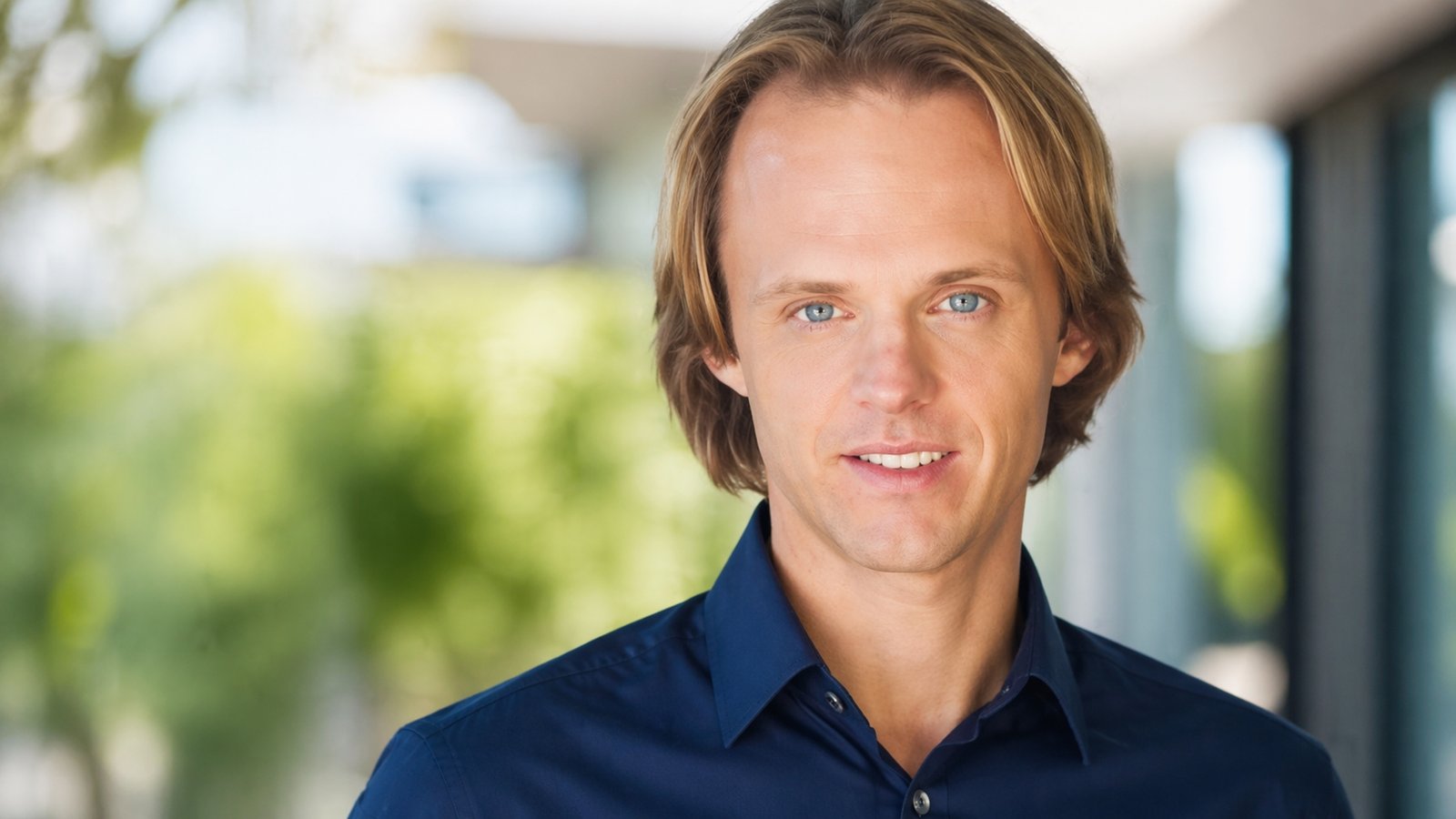
Explore the reported death of David Wilcock, including what happened, why the story spread so quickly, and how his work shaped UFO and New Age culture. This article examines the facts, the legacy, and the wider meaning of the moment.
The announcement of David Wilcock’s death shocked millions of followers around the world. On 20 April 2026, deputies from the Boulder County Sheriff’s Office were called to a mental‑health crisis on Ridge Road in Nederland, Colorado. They encountered a man outside his home who used a weapon on himself and was pronounced dead at the scene. U.S. Representative Anna Paulina Luna subsequently posted a message on social media that appeared to confirm the tragic passing of the writer and UFO researcher. Although the local coroner has not yet publicly released the name, widely circulated reports identify the deceased as David Wilcock, a prominent figure in the “disclosure movement”. This article explores Wilcock’s life, the circumstances of his reported death, his contributions and controversies, the reactions of supporters and critics, and what his legacy means for the UFO and New Age communities.
Born on March 8 1973 in Rotterdam, New York, David Wilcock grew up fascinated by spirituality, science fiction and the unknown. According to biographical notes, he studied psychology at the State University of New York at New Paltz (SUNY New Paltz)—an educational background that introduced him to academic concepts while allowing him to pursue personal interests in consciousness studies. His rural upbringing in upstate New York and early exposure to books on metaphysics cultivated a lifelong fascination with mysticism, ancient cultures and extraterrestrial theories.
Wilcock’s entry into public life began through self‑published works and online articles exploring esoteric subjects. He gained mainstream attention with his 2011 book The Source Field Investigations, which the publisher promoted as a wide‑ranging investigation into alternative sciences and ancient prophecies. An official library description notes that the book synthesizes hidden science and lost prophecies, exploring DNA transformation, wormholes, ancient conspiracies and the Maya calendar. Wilcock presented 2012 not as an apocalyptic end but as a catalyst for “a greater reality” and a potential golden age. The book, along with The Synchronicity Key and Awakening in the Dream, became New York Times bestsellers and established Wilcock as a leading New Age author.
In addition to writing, Wilcock became a media personality. He appeared on the long‑running television series Ancient Aliens, offering speculative commentary on extraterrestrial influences in human history. His charismatic delivery and willingness to connect disparate pieces of mythology and science resonated with viewers seeking alternative explanations. In 2013, the streaming platform Gaia—which specializes in consciousness, yoga and metaphysical content—launched Wisdom Teachings with David Wilcock, a show in which he delivered weekly lectures on science, spirituality and conspiracy topics.
A significant portion of Wilcock’s following stems from his role in the “disclosure movement,” a loosely defined community advocating for the release of suppressed information about extraterrestrial life and advanced technologies. Wilcock hosted online forums and live conferences, encouraging attendees to believe that governments and secret societies possess knowledge of alien civilizations and free‑energy technologies. He claimed that leaks and whistle‑blowers would soon usher in a new era of human evolution. His supporters often referred to him as a visionary; his detractors labeled him a conspiracy theorist who blurred the boundaries between speculation and fact.
Wilcock also compared himself to Edgar Cayce, the early 20th‑century American psychic. In interviews and lectures, he stated that he believed he was Cayce’s reincarnation. This claim, repeated in fan biographies, became part of the mythology surrounding Wilcock. His critics considered the assertion audacious, but for devotees it added a mythic dimension to his persona.
On Monday 20 April 2026, the Boulder County Sheriff’s Office responded to a mental‑health crisis in the 1400 block of Ridge Road in Nederland, Colorado, where Wilcock resided. Deputies encountered a man outside his home holding a weapon; according to officials, he used it on himself and was pronounced deceased at the scene. While authorities have not officially released the individual’s identity, the incident quickly became headline news. U.S. Representative Anna Paulina Luna posted on X (formerly Twitter) expressing prayers for the family of David Wilcock and the millions he impacted. Within hours, multiple news outlets reported that the man was Wilcock.
Table 1 – Reported timeline of the incident
| Time & date | Reported event | Source |
|---|---|---|
| 19 April 2026 | Wilcock posts a final message online: “Always remember that the Creator is within and we live in a loving universe”. | Social media report |
| Morning of 20 April 2026 | Sheriff’s deputies respond to a mental‑health call at Wilcock’s residence. | Boulder County Sheriff’s Office (via news reports) |
| Upon arrival | Deputies encounter a man outside holding a weapon; he uses it on himself and is pronounced dead. | News reports citing sheriff’s statement |
| Later 20 April 2026 | Anna Paulina Luna posts condolences, effectively confirming Wilcock’s passing. | X (Twitter) |
| Subsequent days | Fans and colleagues express shock; speculation and rumors circulate. | Social media and news reports |
The Boulder County Sheriff’s Office has not publicly released a completed incident report or coroner’s findings. Their statement described the event as a self‑inflicted gunshot that occurred during a mental‑health crisis. U.S. Representative Anna Paulina Luna called Wilcock’s death “tragic” and highlighted his influence on millions. Given the sensitive nature of suicide investigations, additional details may be withheld pending notification of next of kin and toxicology results. Media outlets emphasize that all information remains unofficial until confirmed by the coroner.
The speed at which news travels on social media has allowed rumors to flourish. Some supporters have suggested that Wilcock faked his death, citing previous predictions about staged disclosures. Others have proposed foul play, given the controversial nature of his work. While speculation is understandable, there is currently no evidence supporting these claims. Responsible reporting requires waiting for official documents and avoiding unverified sensationalism. Readers should consult credible news sources rather than anonymous social‑media threads.
Within hours of the news breaking, reactions poured in from across the world. Fans remembered Wilcock as a charismatic lecturer whose blend of science and mysticism inspired curiosity about the unknown. Social‑media feeds were flooded with #RIPDavidWilcock posts; some shared stories of attending his workshops or reading his books. Others expressed disbelief, noting that Wilcock’s final social‑media post—uploaded the day before the incident—emphasized the presence of the Creator and a loving universe.
Prominent figures in the UFO community, including authors Nick Pope and Erich von Däniken, were also mentioned in condolence messages. Tragically, both Pope and Däniken were themselves reported to have died in the weeks surrounding Wilcock’s passing. The confluence of these deaths left many enthusiasts feeling that an era was ending. Critics of Wilcock’s work offered restrained condolences while acknowledging disagreements with his theories.
Reactions underscore Wilcock’s broad reach. He cultivated a community that extended beyond believers; even those who disagreed with his theories recognized his ability to connect with audiences on topics often dismissed by mainstream culture.
Wilcock’s books and lectures bridged esoteric traditions with modern physics. In The Source Field Investigations, he argued that hidden science and lost prophecies point toward DNA transformation and wormholes and that the universe is structured around “energy fields” that drive spiritual evolution. His subsequent works, such as The Synchronicity Key, explored how meaningful coincidences (synchronicities) connect personal experiences to cosmic cycles. Through conferences, he encouraged audiences to consider ancient myths and sacred geometry as evidence of extraterrestrial influence and spiritual awakening.
Wilcock positioned himself as both curator and protagonist within the disclosure community. He interviewed alleged insiders who claimed knowledge of secret space programs, advanced technologies and government cover‑ups. By weaving these interviews into his own narrative, he created a story line in which cosmic forces and hidden alliances guided humanity toward ascension. This narrative resonated with individuals seeking meaning in uncertain times.
Mainstream media outlets often treated Wilcock skeptically, characterizing his claims as pseudoscience. Scientists pointed out that his assertions about DNA transformations and wormholes lacked empirical support. Skeptical investigators highlighted inconsistencies in stories told by his whistle‑blowers. Nevertheless, Wilcock’s ability to package complex ideas into accessible language allowed him to penetrate mainstream culture through television appearances and YouTube streaming.
A distinctive element of Wilcock’s brand was his claim that he was the reincarnation of Edgar Cayce, a famous American psychic. This idea, repeated on fan sites, underscored his self‑perception as a conduit for higher wisdom. Followers who already revered Cayce found the notion inspiring; critics dismissed it as self‑aggrandizement. Regardless of belief, the association demonstrates how Wilcock leveraged historical figures to legitimize his work.
Through Gaia, Wilcock delivered hundreds of episodes of Wisdom Teachings, blending metaphysics, pop culture and current events. The subscription platform’s global reach amplified his influence. Wilcock also produced documentaries, such as The 2012 Enigma, which reportedly attracted more than two million viewers. By harnessing emerging streaming technologies, he kept his audience engaged long after the 2012 phenomenon had passed.
Many scientists and skeptics criticized Wilcock for promoting pseudoscientific ideas without empirical support. His assertions about ancient astronauts, DNA transformation and free‑energy devices were often based on speculative interpretations rather than peer‑reviewed research. Critics argued that presenting conjecture as fact misled audiences and contributed to distrust in science. Websites dedicated to debunking pseudoscience frequently dissected his lectures, pointing out logical fallacies and misrepresentations of quantum physics.
Some detractors accused Wilcock of monetizing spirituality. His seminars, courses and books commanded premium prices, leading to allegations that he exploited vulnerable individuals seeking spiritual guidance. Supporters countered that producing high‑quality content required funding and that participants derived value from his teachings. This debate highlighted broader tensions within the New Age market about the ethics of charging for spiritual knowledge.
Wilcock collaborated with other prominent figures in the disclosure movement, including Corey Goode and Emery Smith. Over time, disagreements about revenue sharing and narrative control led to public splits. Court documents from 2021 show that Goode filed lawsuits alleging defamation and fraud. These legal battles exposed fractures within the community and tarnished the movement’s image. Wilcock’s supporters viewed the disputes as efforts by detractors to discredit him; critics saw them as evidence of opportunism within the movement.
Even before the reported suicide, Wilcock’s mental health was a subject of discussion among his followers. He often alluded to feeling targeted by “dark forces” and spoke of personal struggles. In online videos he sometimes displayed erratic behavior, prompting concern from colleagues. The circumstances surrounding his death—occurring during a mental‑health crisis—highlight the real human toll of living under constant scrutiny and the importance of mental health support for public figures.
Nick Pope is a British journalist and former employee of the U.K. Ministry of Defence who investigated UFO reports in the 1990s. He later became an author and media commentator. In early 2026, shortly before Wilcock’s reported death, news outlets announced Pope’s passing. Unlike Wilcock, Pope generally adopted a more cautious tone, emphasizing that many UFO sightings have mundane explanations and urging careful investigation. Their careers converged on the topic of UFOs but diverged in methodology; where Wilcock embraced speculative narratives, Pope focused on official documentation and witness testimony.
Swiss writer Erich von Däniken rose to prominence in the 1960s with his bestseller Chariots of the Gods?, which proposed that ancient civilizations were visited by extraterrestrials. Von Däniken’s ideas influenced the ancient‑astronaut genre and inspired television programs like Ancient Aliens. Reports of his death in 2026 added another layer to the sense of loss within the UFO community. Von Däniken and Wilcock both popularized ancient‑alien theories, but the former built his arguments around archaeological anomalies, whereas the latter integrated quantum physics and metaphysics.
The almost simultaneous departures of Wilcock, Pope and von Däniken invite reflection on generational shifts within the UFO and New Age movements. Each figure appealed to different demographics: von Däniken to the baby‑boomer generation, Pope to Gen X and Wilcock to millennials and Gen Z via digital platforms. Their absence may create space for new voices or accelerate fragmentation as followers seek new leaders. It also underscores the need for critical literacy: as charismatic personalities fade, audiences must learn to evaluate claims independently rather than rely on authority figures.
News of any suicide can have far‑reaching emotional impacts, especially when the deceased is a public figure. The report that Wilcock used a weapon on himself during a mental‑health crisis is a reminder that mental health challenges can affect anyone, regardless of success or beliefs. It also emphasizes the importance of responsible reporting: sensationalizing suicides can contribute to contagion effects, whereas focusing on prevention and support can save lives.
Signs that someone may be contemplating suicide include expressions of hopelessness, withdrawal from social activities, dramatic mood swings, talk of being a burden, and access to lethal means. When such signals appear, compassionate intervention can make a difference. Asking someone directly whether they are thinking about suicide does not increase risk; rather, it opens a door to support.
In the United States, the 988 Suicide & Crisis Lifeline is a confidential, 24/7 hotline that connects callers with trained counselors. The service offers phone, text and chat options, ensuring accessibility for different communication preferences. The Lifeline emphasizes that no one should face crises alone and encourages people to call, text or chat whenever they need support. Additional resources include community mental‑health centers, therapists and support groups. International readers can consult local hotlines or organizations such as the World Health Organization for guidance.
Friends and family play a crucial role in suicide prevention. Listening without judgment, encouraging professional help and checking in regularly can provide emotional anchors for those struggling. It is also important to take care of oneself when supporting someone else; caregiver fatigue can impact one’s own mental health. Communities can create networks of care that destigmatize seeking help and foster resilience.
David Wilcock was an American writer and New Age theorist known for best‑selling books like The Source Field Investigations and The Synchronicity Key. He hosted television and streaming shows that blended science, spirituality and conspiracy theories.
On 20 April 2026, authorities in Boulder County responded to a mental‑health call at his home in Nederland, Colorado. Deputies reported that a man—widely believed to be Wilcock—died from a self‑inflicted gunshot wound.
As of this writing, the local coroner has not publicly released a report. U.S. Representative Anna Paulina Luna posted condolences that implicitly confirmed Wilcock’s passing. Until official documents are released, some uncertainty remains.
He was known for advocating the disclosure of suppressed information about extraterrestrial life, producing the documentary The 2012 Enigma, hosting Ancient Aliens and Wisdom Teachings on Gaia, and authoring books that mix alternative science, metaphysics and conspiracy theories.
Yes. Wilcock asserted that he was the reincarnation of early 20th‑century psychic Edgar Cayce. This claim was controversial and is not supported by empirical evidence.
Reactions have ranged from grief among fans who admired his work to measured condolences from critics. Many colleagues in the disclosure community posted tributes, and some mainstream commentators urged compassion while maintaining skepticism about his ideas.
The disclosure movement is a loosely organized network of activists, researchers and enthusiasts advocating for the release of government information about UFOs, extraterrestrials and advanced technologies. Members believe that suppressing such knowledge impedes human progress and spiritual evolution.
If you are in the United States, call, text or chat with the 988 Suicide & Crisis Lifeline for confidential, 24/7 support. If you are outside the U.S., consult local mental‑health services or international resources such as the World Health Organization.
David Wilcock’s reported death marks a significant moment for communities that intersect science fiction, spirituality and conspiracy. His ability to weave narratives that blend ancient myths, modern physics and political intrigue captivated audiences while drawing intense criticism from skeptics. Whether hailed as a visionary or dismissed as a pseudoscientist, Wilcock left a lasting imprint on the New Age and disclosure movements. The story of his life—a rural kid fascinated by the unseen who became a global media figure—offers insights into how digital platforms amplify fringe ideas and create charismatic leaders.
As the UFO research community processes the loss of Wilcock alongside other prominent figures like Nick Pope and Erich von Däniken, it faces a turning point. Followers must reconcile their admiration with a commitment to critical inquiry. Observers must balance curiosity with skepticism. Above all, the tragic circumstances of his reported death underscore the importance of mental‑health support for those operating in high‑stress, highly scrutinized environments. Readers seeking to understand the broader landscape of alternative science and spirituality will find Wilcock’s story a compelling case study—and a reminder that human lives, not just theories, are at the center of every movement.