Physical Address
304 North Cardinal St.
Dorchester Center, MA 02124
Physical Address
304 North Cardinal St.
Dorchester Center, MA 02124

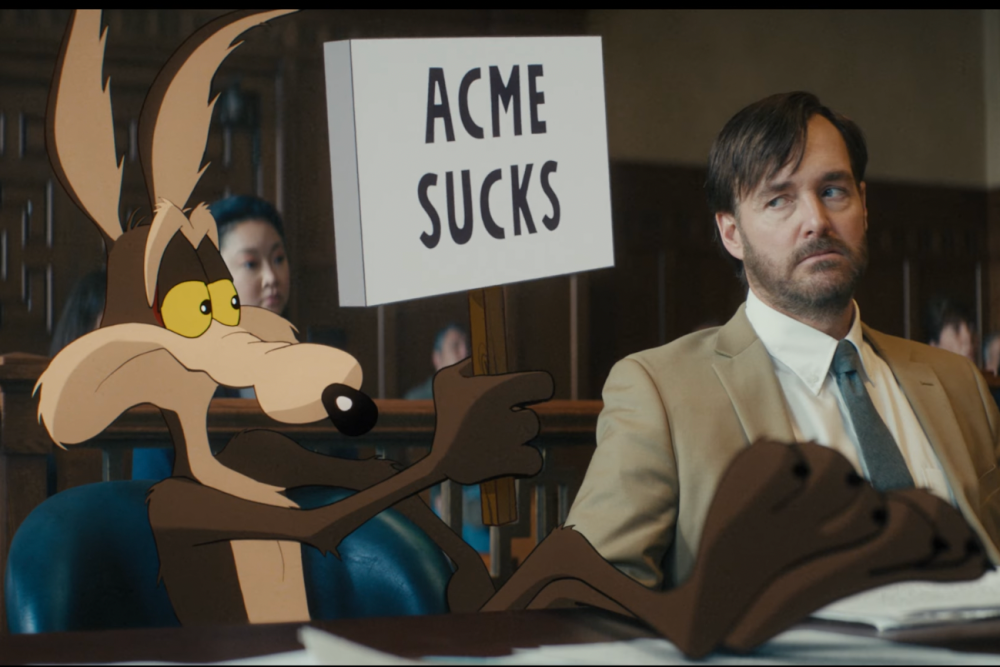
Coyote vs Acme is a live-action and animated Looney Tunes film about Wile E. Coyote suing Acme Corporation. Here is everything known so far, including release date, cast, story, and trailer details.
After years of rumors, cancellations, and an improbable revival, Coyote vs. Acme is finally on the horizon. This live‑action and animation hybrid promises to take one of the oldest rivalries in pop culture — Wile E. Coyote versus the Road Runner — and turn it into a legal comedy about corporate accountability. As of April 2026 the film has not yet reached cinemas, but producers have confirmed an August 28 2026 theatrical release. This comprehensive guide brings together the history, cast, plot details, controversies, and context surrounding the long‑gestating project so readers can understand how a film once written off for a tax break became one of the most anticipated family movies of 2026.
In the classic Looney Tunes shorts, animator Chuck Jones imagined Wile E. Coyote as a gaunt, industrious predator perpetually scheming to catch the Road Runner. He based the coyote on a description from Mark Twain’s Roughing It and conceived the duo as a parody of cat‑and‑mouse cartoons like Tom and Jerry. Over the years, the shorts developed a set of rules: the Road Runner never harms the Coyote except by “beep‑beep,” the Coyote’s misfortunes stem only from his own ineptitude or Acme’s faulty products, all props come from the Acme Corporation, and gravity is his greatest enemy. These conventions cemented the pair as icons of slapstick persistence; Wile E. falls off cliffs, gets crushed by boulders, and continues his pursuit with undeterred resolve.
Coyote vs. Acme takes this formula into a different arena. The story adapts Ian Frazier’s 1990 New Yorker essay “Coyote v. Acme,” a mock legal brief in which Wile E. Coyote sues Acme for injuries caused by defective gadgets. The film reimagines this satirical lawsuit as a live‑action comedy: after decades of explosive mishaps, Wile E. hires a human attorney to hold Acme accountable. The premise invites a new kind of humor — one that juxtaposes the absurd physics of Looney Tunes with the procedural seriousness of a courtroom — while exploring themes of corporate negligence and the underdog’s quest for justice.
Warner Bros. first announced plans for a Wile E. Coyote film in 2018, with development led by producers Chris DeFaria and a screenplay by the Silberman brothers. Director Dave Green, known for Earth to Echo and Teenage Mutant Ninja Turtles: Out of the Shadows, was hired to helm the project, and Samy Burch crafted the script from a story by James Gunn and Jeremy Slater. Principal photography wrapped in 2022, and the film was scheduled for a theatrical debut on July 21 2023.
In April 2022 Warner Bros. removed Coyote vs. Acme from its release schedule and filled the summer slot with Barbie. Then, on November 9 2023, new leadership at Warner Bros. Discovery shelved the completed film, opting to claim a $30 million tax write‑off. This decision mirrored the studio’s controversial cancellations of Batgirl and Scoob! Holiday Haunt, and it drew swift backlash from filmmakers and fans. The cast and crew were not notified until after the decision was made, prompting director Dave Green to express his disappointment and highlight his desire to honor the Looney Tunes legacy.
The cancellation sparked a grassroots campaign across social media. Hashtags like #ReleaseCoyoteVsAcme trended, and industry figures who had seen the movie praised its test screenings. Critics argued that writing off a finished film harmed the artists who worked on it, and some called the move a symbolic example of corporate decisions trumping creative labor. Amid this uproar, Warner Bros. executives reportedly allowed the filmmakers to shop the movie to other distributors. Streaming giants including Netflix, Amazon, and Paramount expressed interest, but none met the studio’s initial asking price of $75–$80 million. The project remained in limbo through early 2024, while fans continued to rally behind the film’s release.
In March 2025, independent distributor Ketchup Entertainment announced that it had struck a deal with Warner Bros. to acquire worldwide distribution rights. Ketchup’s CEO Gareth West described the film as a “perfect blend of nostalgia and modern storytelling” and believed it would resonate with longtime fans and newcomers alike. Reports indicated the company paid around $50 million for the rights, surprising observers because Warner had rejected higher offers from streaming services. The sale closed at the end of March, and in July 2025 actor Will Forte announced at San Diego Comic‑Con that the movie would receive a global theatrical release on August 28 2026deadline.com.
After securing the film, Ketchup Entertainment embarked on a longer marketing campaign than its previous Looney Tunes release The Day the Earth Blew Up. The distributor unveiled a teaser poster in early 2026 and revealed that the first trailer would debut in April. On April 22 2026, a full trailer premiered online, giving audiences their first look at the live‑action actors interacting with animated characters in a vibrant courtroom and desert setting. The trailer promises slapstick mayhem alongside heartfelt moments, emphasizing the film’s dual appeal to nostalgia and contemporary family audiences.
Ian Frazier’s 1990 essay “Coyote v. Acme” imagines Wile E. Coyote filing a lawsuit against the Acme Corporation over products that repeatedly explode, malfunction, or otherwise fail at critical moments. The mock legal brief details 85 instances where Acme devices caused bodily injury due to defective manufacture or inadequate warnings, transforming the cartoon antics into legal arguments. The humor lies in juxtaposing formal legal language with cartoon absurdity, and Frazier’s piece quickly became a cult favorite among lawyers and fans alike. By expanding this premise into a feature film, the creators of Coyote vs. Acme can explore themes of product liability, personal injury, and corporate accountability through a family‑friendly lens.
According to available plot descriptions, the film follows Wile E. Coyote (voiced by Eric Bauza) as he decides he has had enough of Acme’s malfunctioning gadgets. He hires Kevin Avery (played by Will Forte), a down‑on‑his‑luck attorney whose career is in jeopardy, to sue Acme for damages. The case pits them against Buddy Crane (John Cena), a charismatic lawyer representing Acme and also Kevin’s former boss. As the trial unfolds, the film intersperses live‑action courtroom scenes with animated sequences illustrating Wile E.’s past catastrophes — from rocket skates propelling him into cliffs to spring‑powered shoes launching boulders onto his head. Kevin’s niece Paige (played by Lana Condor) assists with the case, providing comic relief and moral support.
Beyond the basic lawsuit, Coyote vs. Acme reportedly explores the idea that Wile E.’s failure is not solely due to his own bumbling, but also to systemic negligence by a corporate giant. It invites audiences to root for an underdog who refuses to give up despite humiliating setbacks — a theme that has defined the character since his debut in 1949. The courtroom setting allows the film to parody legal dramas while honoring the physical comedy of the original cartoons. The combination of slapstick and satire has drawn comparisons to classics like Who Framed Roger Rabbit, which blended live actors with animated characters to create a similarly irreverent tone.
While not a direct sequel to previous Looney Tunes films such as Space Jam or Back in Action, Coyote vs. Acme shares DNA with those hybrid projects. The film acknowledges the long history of Wile E. and the Road Runner by incorporating many familiar gags and references. Chuck Jones’s original “rules” are explicitly discussed, reminding viewers that outside forces cannot harm the Coyote — only Acme products and his own fanaticism. These rules set up humorous contradictions in the legal arguments, as the defense attorney might argue that Wile E. voluntarily chose dangerous devices or misused them. The filmmakers have teased that dozens of Looney Tunes characters will appear in supporting roles and cameo cameos, creating a rich universe where Daffy Duck may serve as a bumbling witness or Bugs Bunny might deliver unexpected legal advice.
The human cast of Coyote vs. Acme brings together comedic and action talent:
Director Dave Green brings experience balancing live‑action and special effects from Teenage Mutant Ninja Turtles: Out of the Shadows. Screenwriter Samy Burch, whose script for May December garnered critical acclaim, adapts the New Yorker essay with contributions from James Gunn and Jeremy Slater. The film’s score is composed by Steven Price, whose previous work includes Gravity and Fury, and cinematography is by Brandon Trost, known for his dynamic visuals in comedies and action films.
The idea of dramatizing the Coyote’s frustration predates the current film. As early as the 1980s, Looney Tunes comics and parodies imagined Wile E. suing Acme. Ian Frazier’s essay gave that notion a formal structure, and subsequent stage readings and mock trials kept the idea in pop culture. When Warner Bros. sought to revitalize its animation IPs in the late 2010s, a live‑action/animated hybrid seemed like a natural evolution. Producer Chris McKay initially oversaw development, and early drafts reportedly leaned heavily into meta‑humor and fourth‑wall breaks.
Filming began in New Mexico in 2021 and wrapped in 2022. The production combined live sets with blue‑screen environments to integrate animated characters. Animators from the Warner Animation Group worked alongside visual‑effects artists to ensure the cartoon characters retained their exaggerated physicality while interacting believably with real actors. The crew also consulted legal experts to craft plausible courtroom procedures and product liability arguments, adding authenticity to the satire.
Warner Bros.’ November 2023 decision to shelve the completed film shocked the industry. Executives opted to treat the movie as a loss for tax purposes, effectively writing off its entire budget. This practice, while legal, ignited debate about the ethics of discarding finished creative work for financial reasons. According to reports, several filmmakers walked out of meetings with the studio in protest, and some argued that the tax write‑off was anticompetitive because it prevented competitors from acquiring the film. The outcry illustrates how corporate decisions can clash with artistic values, an irony not lost on commentators who noted that the film’s plot criticizes precisely that kind of corporate indifference.
After the cancellation, Warner allowed private screenings for potential buyers. Netflix, Amazon, and Paramount expressed interest, and some offers reportedly exceeded Warner’s asking price. However, negotiations stalled when the studio insisted on a higher figure or retained rights. It wasn’t until independent distributor Ketchup Entertainment — known for riskier, star‑driven projects — entered the conversation that a deal materialized. Analysts speculated that Ketchup’s willingness to guarantee a theatrical run and invest in marketing made its offer appealing. The sale closed in March 2025, and the film’s marketing shifted to emphasize its underdog narrative and comeback story.
The reaction to Warner’s tax write‑off decision was swift and emotional. Many creators saw the move as emblematic of corporate disregard for art. Directors like Peter Atencio and Adil El Arbi publicly criticized the decision, and the cast members shared heartfelt messages urging the film’s release. A “funeral screening” was reportedly held for the crew, underscoring the sense of mourning associated with projects killed by corporate accounting. Fans and commentators used humor to cope; memes depicted Wile E. Coyote chasing executives or filing motions to vacate the tax write‑off. The #ReleaseCoyoteVsAcme hashtag trended for weeks, demonstrating how online communities can rally around unfinished art.
Warner’s decision also sparked debate about Hollywood’s evolving business models. The streaming era has encouraged studios to treat content libraries as assets rather than products, leading some to write off films as a cost‑saving strategy. As The Ringer noted, Coyote vs. Acme became an “impassable web of corporate interests” that trapped a cultural object until it was nearly “mummified”. Observers criticized the notion of destroying a completed film to maximize shareholder value, pointing out that the movie’s premise — a character suing a corporation for negligence — mirrors the real‑life dynamics of its shelving. These discussions extend beyond entertainment to questions about art’s value in a data‑driven era. The eventual deal with Ketchup shows that smaller distributors may capitalize on corporate missteps by championing projects that fans already love.
Coyote vs. Acme joins a lineage of live‑action/animation hybrids that include Who Framed Roger Rabbit, Space Jam, and Looney Tunes: Back in Action. Each of these films uses the juxtaposition of real actors and cartoon characters to play with genre conventions and nostalgia. Wile E. Coyote’s popularity stems from his persistence and relatability: he is endlessly humiliated yet never loses hope. Chuck Jones’s rules emphasize that the only forces that harm him are his own errors and Acme’s products. That concept resonates with modern audiences who see themselves as underdogs facing systemic obstacles. The film’s legal satire also echoes real consumer‑protection lawsuits, making the story both timeless and timely.
The teaser poster, released in early 2026, features Wile E. Coyote standing on a mountain of legal briefs and Acme products, looking determined while wearing a neck brace. The tagline plays on the Road Runner’s “beep‑beep” with a legal twist. The full trailer released on April 22 2026 opens with Kevin Avery being fired and stumbling upon Wile E. in the desert. It showcases the film’s mix of physical comedy and legal drama: animated exhibits are introduced as evidence, and the judge is exasperated by cartoon physics in a real courtroom. The trailer reveals glimpses of other Looney Tunes characters — Daffy Duck appears as a legal clerk, and Bugs Bunny is rumored to offer unsolicited cross‑examination tips. The clip also hints at heartfelt moments: Kevin and Wile E. share a bonding scene about perseverance, suggesting that the film will balance humor with character development. Reactions to the trailer were enthusiastic, with fans praising the seamless integration of animation and the film’s self‑aware tone.
Ketchup Entertainment has a longer runway to build anticipation than the film’s original schedule allowed. Analysts note that the distributor learned from the modest marketing campaign for The Day the Earth Blew Up and is investing in cross‑platform promotions. Plans include interactive exhibits at San Diego Comic‑Con and partnerships with nostalgic brands to release Acme‑branded merchandise. Because of the film’s meta‑premise, marketing materials playfully reference the real‑world cancellation: posters feature tags like “back from the vault” and “we filed a motion to unseal.” This self‑referential strategy both acknowledges the controversy and invites audiences to celebrate the film’s resurrection.
Coyote vs. Acme is slated for a wide theatrical release on August 28 2026. Tickets will likely go on sale several months in advance, and major theater chains are expected to offer family packages. Ketchup Entertainment has not yet announced streaming plans, but given industry trends, the movie may land on a subscription service after its theatrical window. It is unclear whether Warner Bros.’ previous streaming partner Max (formerly HBO Max) will secure the rights or whether another platform will acquire the film. Fans interested in early screenings should monitor announcements from Comic‑Con and Ketchup, as sneak previews may accompany promotional events. For those outside the United States, Ketchup plans a day‑and‑date global release, ensuring that international audiences can participate in the long‑awaited premiere.
The Looney Tunes characters, created in the 1930s and 1940s, continue to find new life through films, television series, and advertising. Wile E. Coyote and the Road Runner debuted in 1949 and have since appeared in dozens of shorts, video games, and commercials. By positioning Wile E. as the protagonist of a feature film, Coyote vs. Acme signals a shift toward deeper exploration of side characters. The movie’s premise underscores that even second‑tier characters can carry a story when given a compelling arc. It also reflects the appetite for nostalgic IPs that appeal to both adults who grew up with the cartoons and children discovering them for the first time.
Beyond its entertainment value, the film doubles as a critique of corporate behavior. By suing Acme, Wile E. frames a conversation about product safety and corporate responsibility that echoes real consumer lawsuits. In the wake of events like the 2023 train derailment in Ohio or recalls of defective products, audiences may see the case as an allegory for the little guy fighting back. The film’s tumultuous journey — from being shelved for a tax write‑off to being revived by a smaller distributor — reinforces this theme. It suggests that art, like the Coyote, sometimes has to claw its way out from under corporate boulders. The alignment of plot and production history makes Coyote vs. Acme a uniquely self‑referential commentary on the entertainment industry.
The #ReleaseCoyoteVsAcme movement demonstrates how fans can influence corporate decisions. While not every campaign succeeds, the sustained interest kept the film in the public consciousness and may have encouraged Ketchup to step in. Similar movements, such as #ReleaseTheSnyderCut, show that vocal online communities can alter release strategies when companies recognize a market. In this case, the campaign also united animation enthusiasts, legal professionals, and media critics, proving that cross‑disciplinary support can affect outcomes.
The revival of Coyote vs. Acme may encourage studios to reconsider the practice of shelving completed projects. Ketchup’s acquisition indicates there is value in finished content beyond immediate write‑offs. If the film succeeds at the box office, it could embolden other distributors to rescue shelved projects and push for creative autonomy. Conversely, if it underperforms, some executives may cite it as justification for tax write‑offs. Either way, the film’s fate will be closely watched by filmmakers and industry analysts as a litmus test for balancing art and finance in the streaming era.
The film is scheduled for a August 28 2026 theatrical release in the United States and other major markets.
It follows Wile E. Coyote as he sues the Acme Corporation for selling him defective products. He hires lawyer Kevin Avery to take the case, and the story blends live‑action courtroom scenes with animated flashbacks.
Will Forte plays attorney Kevin Avery, John Cena portrays Acme lawyer Buddy Crane, Lana Condor plays Paige Avery, and Eric Bauza voices Wile E. Coyote.
Warner Bros. shelved the completed film in November 2023 to claim a tax write‑off. After industry backlash and fan campaigns, independent distributor Ketchup Entertainment bought the rights in March 2025 and scheduled a 2026 release.
Although it shares characters with Space Jam and Looney Tunes: Back in Action, the movie is a stand‑alone story inspired by the 1990 New Yorker essay.
Yes. Producers and director Dave Green have hinted that numerous Looney Tunes icons, including Bugs Bunny and Daffy Duck, will appear in supporting roles and cameos throughout the film.
Streaming plans have not been announced. It is expected to debut on an unspecified streaming service after its theatrical window, but no details are confirmed.
Coyote vs. Acme is directed by Dave Green and written by Samy Burch from a story by James Gunn and Jeremy Slater.
The story of Coyote vs. Acme is as much about persistence as the character it portrays. From development and filming to cancellation and rebirth, the movie has weathered shifting corporate priorities and shifting ownership. In doing so, it has become a symbol for artists’ resilience and fans’ dedication. As audiences prepare to see Wile E. Coyote argue his case against Acme, they may also reflect on the larger question underlying the film: who bears responsibility when systems fail us? Whether the answer comes in the form of a verdict or a punchline, the journey to find out has already captured the imagination of moviegoers. For those who love Looney Tunes, legal satire, or stories of unlikely triumph, this upcoming film offers a rare combination of nostalgia and novelty. VeroFox will continue to explore related topics — from the evolution of animated hybrids to the changing economics of film distribution — so readers can appreciate the full context behind Wile E.’s day in court.