Physical Address
304 North Cardinal St.
Dorchester Center, MA 02124
Physical Address
304 North Cardinal St.
Dorchester Center, MA 02124

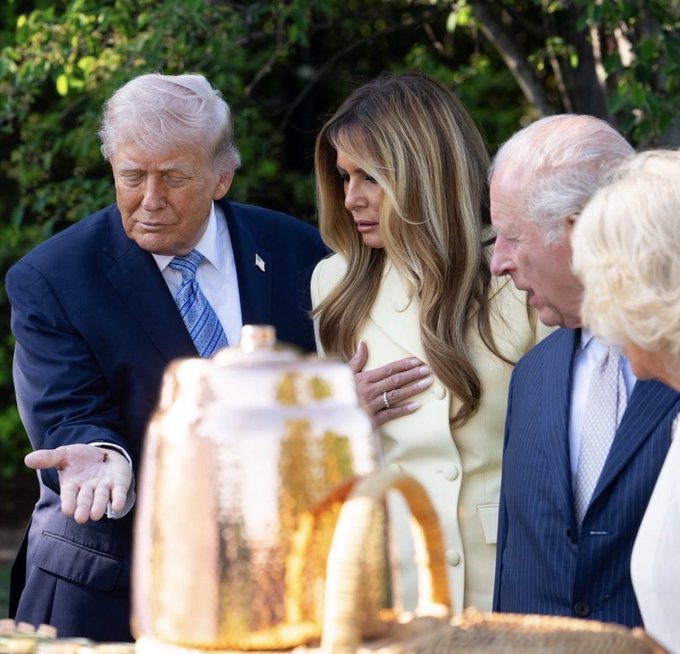
A deep look at Trump telling the bees with King Charles, the ancient folklore behind the ritual, and why the White House beehive moment became a symbolic cultural story.
In late April 2026, Donald Trump welcomed King Charles III and Queen Camilla to the White House for a state visit. The meeting included a stroll across the South Lawn to inspect the newly expanded honey program. The First Lady had unveiled a hand‑crafted hive in the likeness of the executive mansion, and a live bee landed calmly on the former president’s palm as the royals watched. To many observers this seemingly whimsical moment felt like more than a photo opportunity—it echoed the centuries‑old tradition of “telling the bees,” a custom in which keepers formally announce births, deaths and other life‑changing events to their colonies. This article explores the folklore behind the ritual, the symbolism of bees in monarchy and politics, the history of White House beekeeping, and why the 2026 visit resonated well beyond the honeycombs.
Beekeeping has always been as much about culture as about agriculture. In Britain and Western Europe, bees were long believed to be messengers between the human realm and the spirit world. Honeybees appear in biblical passages and ancient myths, and some cultures even revered them as deities or intermediaries. The act of “telling the bees” reflects this reverence: after a family death or other major event, the keeper would knock on the hive and quietly inform the colony. It was believed that failing to notify the bees could bring misfortune, cause them to stop producing honey, or prompt them to abscond.
Accounts of the custom date back to the 18th and 19th centuries, and its origins likely lie in Celtic mythology. Bees were thought to convey souls to the afterlife, and the ritual acknowledged their status as family members rather than mere livestock. Folklorist Charlotte Anderson notes that popular refrains included “The master’s dead, but don’t you go; your mistress will be a good mistress to you,” and “Little bee, our lord is dead; leave me not in my distress”. These incantations underscored the belief that bees could understand and respond to human news.
The tradition extended to joyous occasions as well. Couples would introduce themselves to the hives after a wedding or announce a birth, inviting the bees to bless the union. In some regions, the keeper draped the hives in black cloth as a sign of mourning and placed funeral food nearby. The ritual crossed the Atlantic with Scottish and English settlers, taking root in Appalachian communities, and it persists today as a gesture of respect rather than superstition.
Bees have long symbolized order, industry and loyalty—qualities that monarchies often seek to embody. Ancient Greeks associated bees with the goddess Artemis and regarded the hive as a model of harmonious society. In medieval Europe, the golden bee appeared in royal insignia from Naples to France. The hive’s rigid caste structure, with a single queen at the center, provided a convenient metaphor for monarchy: a well‑organized collective thriving under benevolent rule.
In the United Kingdom, beekeeping has been part of royal life for centuries. Queen Elizabeth II maintained hives at Buckingham Palace and Balmoral, and she was reportedly a bee enthusiast. When she died in 2022, the palace beekeeper John Chapple followed tradition by draping the hives in black ribbon, knocking on each and telling them that “their mistress is dead, but don’t you go; your master will be a good master to you”. The ritual drew global attention, underscoring the enduring bond between monarchy and bees.
The hive also holds political resonance beyond royalty. In the 18th‑century United States, beehives symbolized republican virtues of industriousness and collective effort, appearing on coins and Masonic emblems. For democracies, the hive evokes the idea that individual efforts contribute to a common good. Thus, when leaders publicly interact with bees, observers often read deeper meaning into their gestures.
Bees arrived at the White House in 2009, when carpenter and hobbyist beekeeper Charlie Brandt installed the first hives on the South Lawn. The program flourished under subsequent administrations, supplying honey for teas and state dinners, sweetening salad dressings, and educating visitors about pollinators. By 2026 the two original colonies were producing up to 225 pounds of honey annually.
On April 24 2026, First Lady Melania Trump unveiled a new White House‑shaped beehive hand‑crafted by a Virginia artisan. The addition doubled the existing colonies and was expected to increase annual honey production by about 30 pounds. According to the official announcement, the new hive would not only support culinary needs but also provide honey for gifts and charitable donations. It would aid the pollination of the White House Kitchen Garden and Flower Cutting Garden and offer educational opportunities for visitors to observe a working colony. The expansion continued a legacy of stewardship that began with Michelle Obama’s garden initiative and reflected a bipartisan appreciation for urban apiculture.
The newly installed hive sits near the original apiary and is designed to blend artistry with function. Crafted from sustainable wood and painted white with classical columns, it mirrors the architecture of the Executive Mansion. The design also signals the administration’s desire to cultivate a unique American symbol—unlike British hives often painted in pastel colors and adorned with royal crests. By choosing a house‑shaped hive, the White House literally merged the home of the head of state with the home of its bees.
| Year | Administration | Major beekeeping development |
|---|---|---|
| 2009 | Obama | White House carpenter Charlie Brandt installs the first beehives on the South Lawn to support the Kitchen Garden. |
| 2014 | Obama | Honey from the hives is used in home‑brewed White House Honey Ale and served at state dinners. |
| 2017–2020 | Trump | The hives continue producing honey; jars are gifted to visiting dignitaries. |
| April 2026 | Trump | First Lady Melania Trump announces a White House‑shaped hive, adding two colonies and expanding production. |
| April 27 2026 | Trump | During King Charles III’s state visit, the president and First Lady escort the royal couple to the new hive. A bee lands on Trump’s palm, sparking comparisons to “telling the bees.” |
King Charles III’s four‑day state visit marked his first trip to the United States as monarch and coincided with celebrations of America’s 250th anniversary of independence. On April 27 2026 the British royals joined the president and First Lady for a stroll through the South Lawn garden and honey program. Video footage released by the First Lady’s office showed the group admiring the new White House‑shaped hive and jars of honey labeled for the royal guests. White House assistant pastry chef Carlo Figarella joked about sending everyone home with a jar of honey.
It was during this visit that a live bee landed on Donald Trump’s open palm. The former president did not flinch; instead, he held his hand steady as the insect explored his skin. King Charles and Queen Camilla looked on with polite surprise. While it is unclear whether anyone whispered to the hive, many viewers interpreted the scene as a modern enactment of “telling the bees.” Trump’s Scottish maternal heritage and alleged distant kinship with the Stuart line added a layer of intrigue to the moment. In the esoteric reading circulated by some commentators, Trump was symbolically informing the bees—and by extension the world—of a new era: the post‑Elizabeth age in which an American leader welcomes a British king into his “hive” and asserts stewardship over the Anglo‑American relationship.
Donald Trump’s mother, Mary Anne MacLeod, grew up in the village of Tong on the Isle of Lewis in Scotland’s Outer Hebrides. She immigrated to New York in 1930 and became a naturalized citizen in 1942. Trump has long celebrated his Scottish ancestry, owning golf resorts in Aberdeenshire and referencing his mother’s homeland during visits. This heritage became a talking point during his 2025 state visit to the United Kingdom, which the press dubbed a return to his “mother’s homeland”.
In 2026 a Daily Mail–commissioned genealogical study made headlines by claiming that Trump and King Charles share a common ancestor, John Stewart, the 3rd Earl of Lennox. The report suggested that both men are descended from this 16th‑century Scottish nobleman, making them fifteenth cousins. Genealogists pieced together land documents, church records and peerage histories to trace the lineage, though gaps in Scottish archives render the connection speculative. Whether or not the royal and presidential bloodlines converge, the notion underscores how intertwined Scottish heritage and Anglo‑American relations can be.
Beyond folklore, “telling the bees” also offers a window into the etiquette of working with these complex insects. Contemporary beekeepers sometimes perform a simplified ritual as a sign of respect when a family member dies or a major life event occurs. While few now believe that bees will die if not informed, the ceremony reinforces the bond between keeper and colony and provides a moment of reflection.
Although variations exist, a typical modern ritual includes:
These steps blend superstition, respect and mindfulness. Some beekeeping associations still inform members of a colleague’s passing so that everyone may perform the ritual. The act functions as a communal acknowledgment of loss and continuity.
Stories abound of misfortune befalling families who fail to inform their bees. Folklore warns that colonies might stop producing honey, swarm, or even die if kept in the dark. While modern science attributes such behaviors to environmental stressors rather than supernatural displeasure, the cautionary tales emphasize the keeper’s responsibility. In contemporary practice, ignoring the ritual simply forfeits an opportunity for introspection and connection.
Immigrants from Scotland and Northern England brought the custom of telling the bees to North America in the 18th and 19th centuries. In the Appalachian mountains, where Scots‑Irish culture remained strong, beekeepers continued the practice of informing hives about births, marriages and deaths. Over time, the ritual became woven into local folklore alongside ballads, quilting bees and other community traditions.
Appalachian variations sometimes involve singing the news in Gaelic or English, reflecting the linguistic heritage of the settlers. Some families maintain scrapbooks of wedding photos and funeral notices that include notes about telling the bees. In these remote valleys, where livestock and gardens sustained entire households, bees represented both sustenance and companionship. Respecting the bees was a way of respecting the land and its rhythms.
Today Appalachian beekeepers share tales of ancestors who draped hives with black cloth and offered pieces of cake. Modern practitioners may consider the custom quaint, yet they often continue it as a nod to heritage and a chance to slow down in a fast‑paced world.
The 2026 beehive visit quickly transcended its pastoral setting to spark political commentary. Analysts observed that the moment allowed Trump to project calm stewardship in contrast to the pomp of monarchy. By handling a bee with ease and presiding over his own “hive,” he signaled confidence and control. Meanwhile, King Charles—himself an avid organic gardener and champion of environmental causes—appeared deferential on American soil.
Some commentators drew parallels between the handover implied in telling the bees and the transition from Queen Elizabeth II to King Charles III. By publicly showing his thriving hives to the new monarch, Trump seemed to perform a ritualistic alignment of the two nations’ “hives” under new leadership. Others dismissed the interpretation as fanciful, noting that the visit was primarily a photo opportunity timed to coincide with the White House garden tour. Still, the episode highlights how ancient customs can be repurposed in modern diplomacy, inviting audiences to read layers of meaning into simple acts.
While Britain and the United States share a long beekeeping history, their practices reflect distinct cultural and environmental contexts. British hives often adopt the iconic “WBC” (William Broughton Carr) design with stacked boxes and decorative roofs, whereas American beekeepers widely use the practical Langstroth hive with movable frames. The White House‑shaped hive introduced in 2026 combines American architectural pride with European ornamental tradition.
The two countries also differ in regulation. The UK has a formal network of county beekeeping associations and national pest surveillance. The United States relies on state‑level apiary inspections and extension services. Both countries now face similar challenges: pesticide exposure, habitat loss and Varroa mites. Initiatives like the White House honey program and royal garden projects promote pollinator awareness and encourage urban and rural beekeeping alike.
Why do people tell the bees?
The tradition stems from ancient beliefs that bees are messengers between the living and the dead. Informing them of births, marriages or deaths maintains harmony in the hive and honors their role in the household.
What happens if you don’t tell the bees?
Folklore warns that bees might stop producing honey, abscond or die if kept unaware. Modern beekeepers view the ritual as symbolic; neglecting it won’t harm the colony but may forgo a meaningful moment of connection.
Are Donald Trump and King Charles really related?
A 2026 study for the Daily Mail claimed that both men descend from the 3rd Earl of Lennox, making them very distant cousins. Genealogists caution that gaps in historical records make the link speculative.
What is the White House hive shaped like?
The new hive unveiled in April 2026 is hand‑crafted to resemble the White House, complete with columns and a pitched roof.
How long has the White House had bees?
The first official beehives were installed in 2009 under President Obama, and the program has continued across administrations. It expanded in 2026 with the addition of two colonies.
Why did a bee land on Trump’s hand during the state visit?
Bees occasionally explore new surfaces. The calm bee on Trump’s hand became a visual metaphor for the ancient “telling the bees” ritual, symbolizing alignment between the U.S. and U.K. hives.
Do modern beekeepers still tell the bees?
Yes. Some beekeepers in Britain, Appalachia and elsewhere continue the custom as a respectful homage to their bees and cultural heritage.
What roles do bees play in diplomacy?
Bees serve as ambassadors for environmental stewardship. Public hive tours and honey exchanges signal a commitment to sustainability and provide a non‑controversial backdrop for political messaging.
The image of Donald Trump gently cradling a bee while King Charles looked on invites contemplation of continuity and change. It connects the ancient practice of telling the bees to modern statecraft, blending folklore with diplomacy. Bees—small, industrious and deeply symbolic—continue to draw humans into conversations about heritage, environmental stewardship and collective endeavor. By understanding the history and meaning behind the ritual, we can appreciate why a simple visit to a beehive resonated so strongly. As bees pollinate our gardens and stories pollinate our cultures, the hive on the South Lawn reminds us that small gestures often carry large meanings. Readers curious to learn more about beekeeping, folklore or Anglo‑American history will find an abundance of related topics to explore on VeroFox.