Physical Address
304 North Cardinal St.
Dorchester Center, MA 02124
Physical Address
304 North Cardinal St.
Dorchester Center, MA 02124

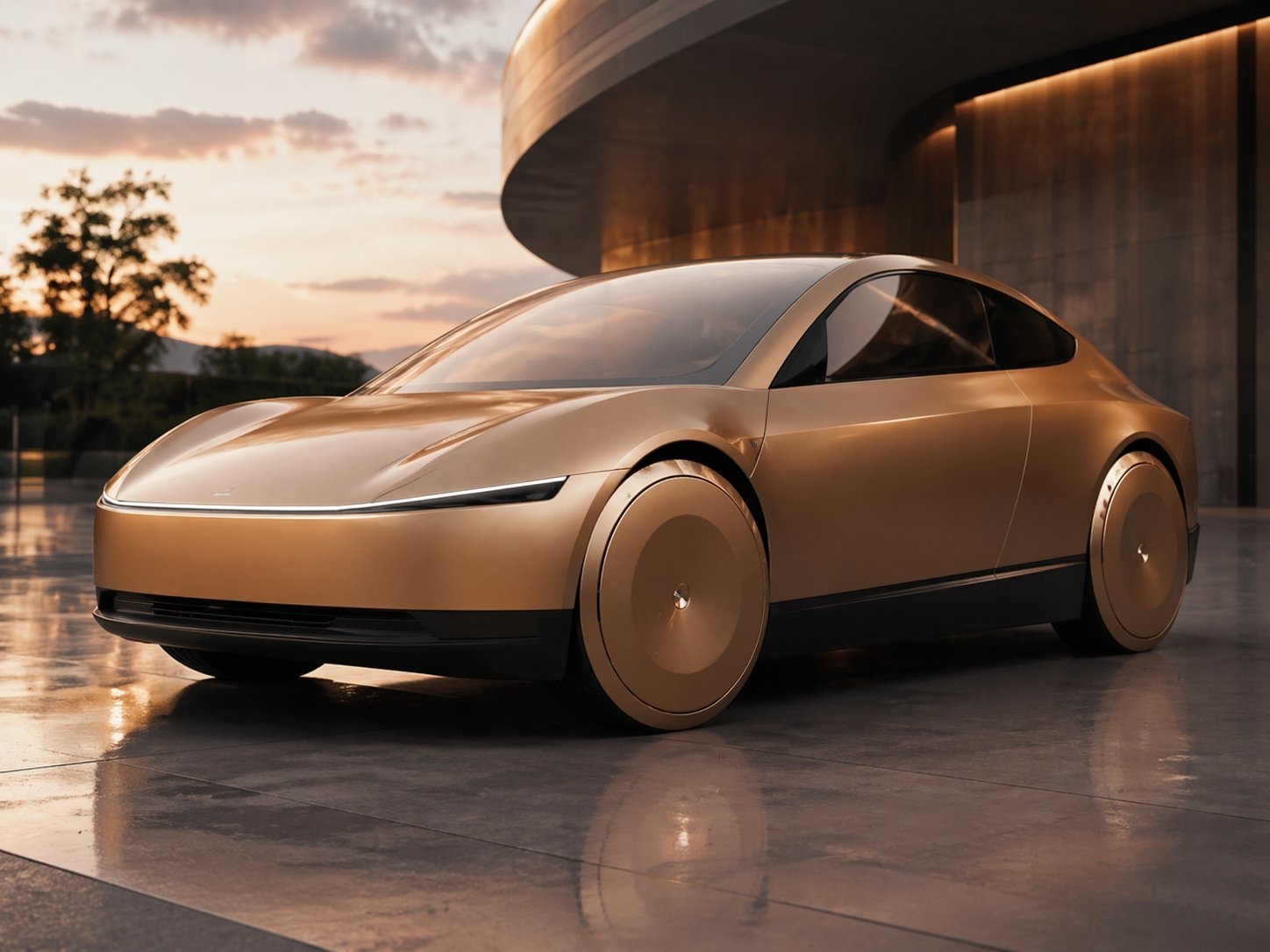
Tesla Cybercab is Tesla’s purpose-built autonomous robotaxi designed for a future of driverless transportation. Explore its design, features, production plans, pricing expectations, and potential impact on ride-hailing and mobility.
Tesla’s Cybercab has captured headlines as one of the most ambitious projects in the company’s history. Designed from first principles as a fully autonomous electric vehicle, the Cybercab is a two‑seat robotaxi built for a world where human drivers are optional. Unlike retrofitted ride‑share cars, it’s engineered to operate with no pedals or steering wheel and is scheduled to enter production in April 2026. This article unpacks what the Cybercab is, how it will be built, why it matters, and what it could mean for mobility, sustainability and society.
When Tesla began designing the Cybercab, it didn’t start with a conventional sedan and remove components. Instead, the company built a vehicle exclusively for autonomous service. Franz von Holzhausen, Tesla’s design chief, explained that the best version of an electric car can’t simply be a conversion from internal combustion. Applying the same logic to autonomy, Tesla avoided the “toaster oven” pod designs common among early robotaxis and created a sculptural, streamlined vehicle. Their research showed that 90–95 % of ride‑share trips involve a single passenger, so the Cybercab uses a two‑seat layout with space for a service animal or wheelchair. By engineering around a single occupant, Tesla reduced weight, improved aerodynamics and unlocked efficiency gains.
The narrow passenger compartment also changes proportions. The rear wheel is larger than the front to visually balance the profile, and butterfly doors open upward to provide a theatrical entry experience. Tesla even uses powered door closures to ensure passengers don’t leave doors ajar, eliminating a common source of ride‑share inefficiency. Interior design echoes the minimalist aesthetic familiar from other Tesla models while adding features critical for commercial use: frameless windows, rounded rear corners to improve aerodynamics and easier cleaning, ambient lighting strips for nighttime visibility, and an open, lounge‑like cabin. A massive 21‑inch touchscreen floats between the seats, and below it are relocated window switches and USB‑C charging ports. An emergency stop button above the screen includes braille to aid visually impaired riders.
Early prototypes of the Cybercab displayed at Tesla’s “We, Robot” event and at the U.S. Department of Transportation revealed a sparse cockpit with no steering wheel or pedals. This design signals Tesla’s intention to run the robotaxi fleet entirely under Full Self‑Driving (FSD) software. However, regulatory differences among jurisdictions mean some early production units may include a steering wheel to satisfy local rules. The ultimate goal, confirmed repeatedly by Elon Musk, is a fleet of vehicles operating entirely without human controls.
Because the Cybercab relies solely on cameras and neural networks, Tesla has added a high‑pressure washer system for every external camera to keep lenses clean in rain or mud. Recent sightings of pre‑production units show larger front‑facing cameras, hinting at a more powerful AI hardware package (often referred to as “Hardware 5”) to process data for unsupervised driving. The cabin also includes a trunk camera to ensure passengers don’t leave belongings behind, underscoring Tesla’s attention to operational details.
At the 2025 shareholder meeting, Tesla executives announced that the Cybercab would be built using an “unboxed” assembly process. Unlike traditional car production lines where bodies move on long conveyors, unboxed assembly stations allow sub‑assemblies to be built in parallel and then merged. This method, combined with Tesla’s experience casting large structural components, promises unprecedented speed: the company aims to roll a new Cybercab off the line every ten seconds. At full speed—twelve hours per day, 350 days a year—this pace equates to over a million vehicles annually from a single plant.
The unboxed method also reduces factory footprint and simplifies logistics, enabling Tesla to operate closer to urban centers. It dovetails with another key innovation: Cybercab uses the Cybercell, a next‑generation 4680 battery cell (Gen 2) designed for high power and longevity. By integrating the battery pack as part of the vehicle’s structure, Tesla reduces weight and complexity while improving range and charging speed.
Tesla hasn’t released official range figures for the Cybercab, but statements from executives suggest the vehicle is engineered for continuous duty. The 4680 Gen 2 cells, sometimes branded as “Cybercell,” are designed to deliver high energy density and rapid charging to minimize downtime between rides. Because the Cybercab is smaller and lighter than a traditional car, energy consumption per mile should be significantly lower than a Model 3 or Model Y. Coupled with aerodynamic sculpting and regenerative braking, these factors contribute to Tesla’s goal of achieving the lowest cost per mile of any ride‑hailing service.
A fully autonomous taxi cannot exist without dependable software. Tesla’s Full Self‑Driving (FSD) program has undergone continuous development, culminating in version 14.3.2, which unified separate neural networks for Summon, FSD, and Robotaxi functions. Previously, different tasks—such as navigating a parking lot versus a highway—relied on separate models. The unified architecture allows the same neural network to handle varied driving environments, improving consistency and speed of execution. Early testers report that features like Actually Smart Summon activate almost instantly.
This software unification benefits more than just Cybercab riders. Because the same AI drives customer vehicles and robotaxis, edge‑case data gathered from unsupervised robotaxi operations can immediately improve FSD performance in personal Teslas. Over‑the‑air updates will continually refine behavior, meaning the Cybercab’s driving abilities should improve over time without mechanical changes.
Hardware to support FSD is equally important. The Cybercab will rely on a camera‑only sensor suite, in line with Tesla’s “vision‑only” philosophy. The larger front cameras spotted on prototype cabs may indicate a new AI processor or lens configuration to increase resolution and field of view. Inside, a massive cabin camera monitors passengers for safety and security, while the trunk camera helps ensure items aren’t left behind. All external cameras are paired with high‑pressure washer nozzles, a critical feature for an unsupervised vehicle that can’t rely on a driver to clean sensors.
Tesla also received FCC approval for ultra‑wideband (UWB) technology that will enable precise positioning and wireless induction charging. This suggests the Cybercab may dock at charging pads without human intervention, further reducing operating costs.
While the Cybercab’s ultimate goal is to operate without a steering wheel or pedals, Tesla has acknowledged that some regions will initially require these controls. The company promises to ship steering wheels and pedals if needed, ensuring early rides comply with local laws. The robust camera suite, unified AI model and over‑the‑air updates contribute to a safety system designed to surpass human driving performance. Teslas with FSD (Supervised) engaged already see fewer major and minor collisions per mile than manually driven vehicles, according to Tesla’s vehicle safety report. While FSD will remain supervised for customer cars, Cybercab operations are expected to be unsupervised, leveraging data from billions of miles driven by the fleet to reduce accident rates even further.
Tesla’s robotaxi service—initially built on modified Model Y vehicles—has already begun offering rides in Austin, Dallas and Houston. According to Tesla’s official robotaxi page, riders can download the Robotaxi app and request a ride today in those cities. The Cybercab will join this fleet and gradually replace it, but Tesla continues to expand the service using Model Y to gather data. At the 2025 shareholder meeting, Tesla announced an aggressive plan to extend the robotaxi pilot to Las Vegas, Phoenix, Dallas, Houston and Miami. In these cities, Tesla aims to remove safety monitors from the passenger seat by the end of 2026, indicating growing confidence in unsupervised operations.
One of the motivations behind the Cybercab is democratization of mobility. Von Holzhausen and engineer Eric Earley emphasise that by focusing on the most common ride‑share scenario—a single passenger—Tesla can achieve the lowest cost per mile on the market. The company envisions fares approaching the cost of a bus ticket, but with door‑to‑door convenience and premium comfort. The robotaxi app currently supports 29 languages and is designed to accommodate service animals and assistive devices.
Tesla has not revealed final pricing for robotaxi rides, but early reports from pilot deployments show that average fares in Dallas and Houston hover around $11 for a six‑mile trip. With the Cybercab’s lower operating costs and the prospect of no driver to pay, fares could drop further. Tesla may also offer subscription plans or discounted rides for frequent users, though these details remain speculative.
Riders will call a Cybercab through Tesla’s Robotaxi app, similar to booking a ride on other ride‑sharing platforms. The app will show the vehicle’s arrival time and allow passengers to unlock the vehicle when it arrives. Because there is no driver, riders must close doors themselves or rely on the powered closure system. Payment occurs through the app, and Tesla may integrate the service into its existing Tesla account infrastructure.
Tesla is not alone in pursuing autonomous ride‑hailing. Waymo, Cruise and Zoox have been operating robotaxi services in select U.S. cities, often with safety drivers or remote monitors. Waymo’s vehicles use a combination of lidar, radar and cameras, while Cruise employs lidar and high‑definition maps. Zoox, owned by Amazon, built a custom four‑seat shuttle. Compared with these competitors, Cybercab’s two‑seat layout and camera‑only approach represent a different bet: Tesla believes computer vision can achieve Level 5 autonomy without lidar and that a smaller vehicle optimized for one passenger will scale faster and cost less. Whether regulators and riders will embrace a camera‑only system remains an open question.
In the U.S., autonomous vehicle regulations are patchwork. States like California allow testing and limited commercial operation, while others, including Texas and Arizona, have adopted more permissive policies. Tesla plans to begin unsupervised service where regulations permit, gradually expanding as laws evolve. The company’s strategy includes shipping steering wheels and pedals when necessary, underscoring its desire to comply while pushing boundaries.
Elon Musk has reiterated multiple times that Cybercab production will begin in April 2026. This commitment, stated repeatedly over six months, is unusual given Tesla’s history of optimistic timelines. Musk tempered expectations by noting that initial production will follow an S‑curve: early units will roll out slowly due to new parts and processes, then ramp up rapidly once bottlenecks are resolved. The first production Cybercab has already rolled off the line at Gigafactory Texas, demonstrating that pre‑production builds are underway.
Tesla’s goal of one Cybercab every ten seconds implies a fully scaled production line operating 12 hours per day, 350 days a year. Achieving this throughput will require an unboxed assembly line at Gigafactory Texas or another facility. Tesla could also license the design to partners or build multiple lines to serve different regions. With the unboxed process, sub‑assemblies like battery packs, powertrain modules and cabin structures are produced separately and assembled in parallel. This modularity allows for quick upgrades; if Tesla introduces a new AI computer or sensor, it can swap the module without redesigning the entire vehicle.
Tesla has not officially announced the price of a Cybercab ride or the cost of the vehicle itself. Analysts speculate that each Cybercab might cost between $30,000 and $40,000 to produce, thanks to its simplified design and low parts count. Because the vehicles will be owned and operated by Tesla rather than sold to consumers, pricing largely matters to investors and fleet managers. Tesla may choose to offer corporate or municipal contracts, revenue‑sharing models or subscription services for access to the fleet. Potential riders will pay per trip, with fares potentially undercutting existing ride‑sharing platforms due to the absence of a driver.
The Cybercab’s exterior is intentionally sculptural rather than utilitarian. Von Holzhausen noted that many autonomous vehicle proposals resemble toaster ovens—boxy pods optimized solely for internal volume. Tesla instead created a sleek shape with smooth curves, reminiscent of the Model Y but scaled down. The rear slopes gently to improve aerodynamics, while sharp edges seen in earlier prototypes were rounded off after testing. Butterfly doors with frameless windows open wide, offering easier ingress and egress in tight urban environments. The doors’ powered closure ensures they are properly shut after passengers enter, addressing a common problem in robotaxi services where riders forget to close doors.
Inside, the Cybercab feels like a premium lounge. Ambient lighting strips run along the doorframes, casting a soft blue glow that serves both aesthetic and functional purposes. The seats are covered in durable materials with flat cushions that are easy to clean and replace, reflecting the high utilization expected in fleet service. Tesla replaced the carpeted trunk from earlier designs with a rugged, non‑carpeted material to withstand frequent use. The minimalist dashboard is dominated by a 21‑inch touchscreen where riders can control ventilation, music and trip information. Under the screen, USB‑C ports and window switches provide convenience without clutter. A large central compartment offers storage for personal items, and the trunk camera ensures nothing is forgotten. The overall effect is more akin to a high‑end lounge than a utilitarian shuttle.
Tesla’s robotaxi program aims to make ride‑hailing accessible to a wide audience. The Cybercab includes braille labels on its emergency stop button, a small but important nod to visually impaired riders. The app supports multiple languages and can accommodate service animals. Tesla has suggested that there will be space for some wheelchairs and assistive devices; however, the two‑seat configuration means not all mobility aids will fit. Future variants or additional vehicles may address this limitation. Tesla also emphasizes that by reducing cost per mile, the Cybercab can expand mobility options for people who cannot afford personal vehicles.
Ride‑share companies like Uber and Lyft rely on millions of independent drivers. Autonomous robotaxis could invert this model by eliminating human drivers altogether, radically reducing operating costs. Tesla’s two‑seat design and unboxed manufacturing indicate a push toward high volume and low cost. If Tesla can produce over a million Cybercabs per year and deploy them across cities, the company could become a major transportation provider. Fares might drop to near the cost of public transit, which would pressure traditional ride‑hailing and taxi businesses to adopt autonomous fleets or face declining market share.
Autonomous fleets also change vehicle utilization. Personal cars sit idle 95 % of the time, whereas a robotaxi can operate nearly 24 hours a day. This high utilization improves return on investment and spreads fixed costs over more miles. It also means fewer vehicles can serve the same number of trips, potentially reducing traffic and the number of cars on urban streets. However, cheap rides may also increase demand for point‑to‑point travel, raising concerns about congestion.
Waymo: Alphabet‑owned Waymo launched its rider‑only service in parts of Phoenix and San Francisco. Its vehicles use lidar, radar and cameras to perceive the environment. Waymo’s four‑seat Chrysler Pacifica and Jaguar I‑Pace robotaxis are designed for families or groups, contrasting with Tesla’s two‑seat approach. Waymo’s vehicles currently operate at low speeds and are limited to geofenced areas.
Cruise: General Motors’ Cruise runs a driverless ride‑hailing service in San Francisco, Phoenix and Austin. Cruise’s chevy Bolt‑based robotaxis also employ lidar and radar. Recently, Cruise paused operations nationwide to address safety concerns after a pedestrian collision. This incident underscores the regulatory scrutiny facing autonomous vehicles.
Zoox: Amazon’s Zoox created a purpose‑built, bidirectional robotaxi with seating for four. The vehicle is symmetrical and can drive in either direction, reducing the need for U‑turns. Zoox’s design emphasizes shared space and social interaction but may face higher manufacturing costs and complexity than Tesla’s simpler two‑seat cabin.
Tesla’s competitive edge lies in vertical integration. The company designs its own batteries, motors, software and manufacturing processes. It also operates the largest global fast‑charging network, Supercharger, which could be adapted for robotaxi recharging. Still, success depends on delivering reliable autonomous performance at scale and navigating varied regulatory environments.
One of Tesla’s stated goals is to democratize access to premium transportation. By lowering the cost per mile and offering door‑to‑door service, the Cybercab could provide an alternative to crowded buses or expensive ride‑shares. This model may particularly benefit people in suburban or underserved areas where public transit is limited. However, critics note that focusing on single‑occupant travel could increase vehicle miles traveled if people choose robotaxis over walking, cycling or public transit.
Electric vehicles produce no tailpipe emissions, and when powered by renewable electricity they can significantly reduce urban air pollution. The Cybercab’s compact size and efficient battery should yield lower energy consumption per mile than larger EVs. High utilization also reduces resource use per passenger mile by spreading manufacturing impacts over more trips. Yet autonomous cars require substantial computing power, which increases energy demand, and the production of batteries and electronics has its own environmental footprint. As such, the net impact depends on sustainable manufacturing and clean electricity.
Autonomous robotaxis threaten millions of driving jobs worldwide. Ride‑share drivers, taxi operators and delivery workers could see their roles diminish as fleets of driverless vehicles enter service. Tesla and other companies argue that new jobs will emerge in fleet maintenance, software development and infrastructure support. Policymakers may need to address retraining and social safety nets. The transition could also impact public transit ridership and funding, especially if cheap robotaxis lure riders away from buses and trains.
Safety is paramount for autonomous vehicles. Tesla’s own data shows fewer collisions when FSD (Supervised) is engaged, but unsupervised operation poses unique challenges. Public acceptance will hinge on consistent, transparent safety records and clear communication about how the system handles edge cases. The absence of a steering wheel may feel unsettling to some riders, so Tesla must provide reassuring experiences. Regulators, meanwhile, will scrutinize the Cybercab’s performance and could mandate additional sensors or remote monitoring. Ethical questions also arise about how the AI prioritizes decisions in unavoidable crash scenarios and how liability is assigned in accidents.
Tesla has a history of optimistic projections. The Cybertruck, Semi and Roadster have all faced delays. Observers therefore question whether Cybercab production will indeed begin in April 2026 and ramp quickly. Musk’s repeated affirmation of the date—three times in six months—is unusual. He has also warned that initial production will be slow due to the many new parts and processes involved. Even once production starts, scaling to millions of units will require massive capital investment and supply chain coordination. Tesla’s ability to produce and deploy enough Cybercabs to make a dent in urban mobility remains uncertain.
Some experts argue that relying solely on cameras is riskier than using lidar and radar. Cameras can be blinded by glare, precipitation or debris, though Tesla’s high‑pressure washer system and neural network processing aim to mitigate these issues. Critics maintain that multiple sensor modalities provide redundancy and resilience. If Cybercab achieves safe operation with cameras alone, it will validate Tesla’s vision‑only philosophy. If not, the company may need to reconsider hardware choices or incorporate additional sensors, potentially delaying roll‑out.
Trust is crucial for adoption. Survey data suggest that many people are wary of riding in a driverless car, especially one without a steering wheel. Tesla hopes to build confidence through beautifully designed vehicles that evoke positive emotions. The use of ambient lighting, powered doors and premium materials aims to make the Cybercab feel inviting rather than intimidating. Tesla also points out that people routinely trust autonomous systems in air and rail travel; they just need time to adapt to similar technology on the road.
If Tesla can successfully deploy Cybercab, it could open doors to other autonomous platforms. Musk has hinted at a larger RoboVan for group travel, and Tesla may apply unboxed assembly to other vehicle categories. Advances in battery technology, AI hardware and energy infrastructure will continue to shape possibilities. The Cybercab could serve as a proving ground for unsupervised autonomy that trickles down to personal vehicles and other industries.
| Feature | Tesla Cybercab | Waymo Robotaxi | Cruise Robotaxi | Zoox |
|---|---|---|---|---|
| Seating capacity | Two seats; optimized for single riders | Four seats (Chrysler Pacifica, Jaguar I‑Pace) | Four seats (Chevy Bolt) | Four seats (bidirectional shuttle) |
| Sensor suite | Cameras only; high‑pressure washer for lenses | Cameras, lidar and radar | Cameras, lidar and radar | Cameras, lidar and radar |
| Design origin | Purpose‑built from first principles | Retrofitted production vehicles | Retrofitted production vehicles | Purpose‑built bidirectional shuttle |
| Production plan | Unboxed assembly; 10‑second cycle time | Traditional automotive assembly | Traditional automotive assembly | In‑house assembly (slow volumes) |
| Launch status | Production start planned for April 2026 | Operating in Phoenix and San Francisco | Operating in San Francisco, Phoenix, Austin (paused) | Testing in Las Vegas and San Francisco |
| Regulatory approach | May ship with steering wheel where required | Uses safety drivers in some areas | Recently suspended after safety concerns | Testing with safety driver and remote monitoring |
| Business model | Owned and operated by Tesla; rides booked through Robotaxi app | Owned/operated by Waymo; riders use Waymo app | Owned/operated by Cruise; rides via Cruise app | Owned/operated by Zoox; still in testing |
| Date | Milestone | Evidence |
|---|---|---|
| November 2025 | Tesla shares design changes (rounded rear, frameless windows, redesigned butterfly doors) and announces robotaxi expansion to Las Vegas, Phoenix, Dallas, Houston and Miami. | Not a Tesla App reports design refinements and expanded testing. |
| February 2026 | Elon Musk reiterates that Cybercab production begins in April 2026, noting the absence of pedals or a steering wheel. | Teslarati cites Musk’s repeated confirmation. |
| March 2026 | Pre‑production Cybercabs spotted with larger front cameras, ambient lighting and relocated window switches. | Not a Tesla App details hardware upgrades and interior refinements. |
| April 2026 | First production Cybercab unit rolls off the line at Giga Texas; mass production slated for April. | Not a Tesla App confirms early production and upcoming mass production. |
| April 2026 (planned) | Mass production begins; initial units may include steering wheels and pedals where required. | Tesla states it will ship steering wheels and pedals if needed. |
Tesla’s Cybercab represents a bold step toward a future where autonomous vehicles reshape how we move. By designing a purpose‑built two‑seater, developing an unboxed assembly line capable of producing a vehicle every ten seconds and unifying its Full Self‑Driving software, Tesla aims to deliver a robotaxi that is efficient, affordable and desirable. The Cybercab’s success, however, hinges on meeting ambitious production timelines, securing regulatory approval and earning public trust. If these hurdles are overcome, the Cybercab could democratize premium transportation and accelerate the adoption of autonomous technology worldwide. For readers curious about the broader implications, VeroFox offers a growing library of articles exploring electric vehicles, autonomous systems and the evolving transportation landscape. Continue exploring to stay informed on the next chapter of mobility.